Bled | a complete travel guide to Slovenia’s most iconic lake
When people think of Slovenia, one image often comes to mind immediately: a crystal-clear blue lake, a small island with a church, and mountains rising in the background. That image isn’t a coincidence. Bled is without a doubt the country’s most famous destination — and at the same time, it’s much more than just that perfect postcard view.
This article may contain affiliate links. If you book something through these links, we may receive a small commission — at no extra cost to you. This helps us continue travelling and sharing our honest experiences.
Table of Contents
Bled is compact, green and easy to navigate, yet it never feels cramped. It’s the kind of place where you naturally slow down. Where walking around the lake isn’t an “activity”, but simply something you do because it feels good. In this guide, I’ll take you through what Bled really is, why it’s so special, and how to make the most of your time here — without turning it into a checklist.
Lake Bled: small in size, big in atmosphere
Lake Bled is located in the north-west of Slovenia, about 35 kilometres from Ljubljana, in the Gorenjska region. The lake itself isn’t large — you can walk all the way around it in roughly an hour and a half — but that manageable scale is exactly what makes it so accessible.
What immediately stands out is the colour of the water. Depending on the season and the light, it shifts from soft green to an intense turquoise. On quiet days, the Julian Alps reflect in the surface and everything seems to slow down for a moment.
In the middle of the lake lies Slovenia’s only natural island, topped by its iconic church. High above the water, Bled Castle towers on its cliff, as if it has been quietly watching visitors come and go for centuries.
Bled owes its shape to an ancient glacier that carved out a deep basin here thousands of years ago. When the ice melted, the basin filled with water. One solid rock formation remained — and that rock is what now forms the island in the middle of the lake.
The same geological activity also created thermal springs on the eastern side of the lake. To this day, that warm water is used in spas and hotels around Bled, which is why the town became popular early on as a spa destination.
How to get to Bled (without the hassle)
Bled is about an hour away from Ljubljana and easy to reach by train, bus or car. The most common question — “where exactly do you get off?” — is also where many people go wrong, so let’s clear that up.
By train: Lesce–Bled is the most commonly used station. It’s about 4 km from the lake and well connected. From here, you continue by bus (stops near or opposite the station), taxi or shuttle.
Bled Jezero is closer to the lake (on the western side), but trains stop here less frequently.
By bus: There are direct buses from Ljubljana to Bled bus station, located in or near the centre. This is often the most relaxed option.
By car: Bled is easy to reach by car and many travellers use it as a base for day trips. Keep in mind that parking around the lake is limited, especially in high season.
Good to know about parking: – Parking directly by the lake is often paid and fills up quickly – There are several official car parks slightly further from the centre, from where you can walk to the lake in 10–15 minutes – During busy periods, traffic measures and parking guidance are in place – Some accommodations offer private parking — definitely worth checking in advance
By taxi: Bled Shuttle is a convenient option for transfers (for example, station → hotel, or Bled → Vintgar Gorge).
How many days do you need in Bled?
Bled isn’t a place you rush through. Two to four days is ideal.
– With 2 days, you get a good feel for the atmosphere and see the highlights – With 3–4 days, you have space for excursions and rest – Staying longeralso works well, especially if you want to combine nature with wellness — or enjoy lake days in summer
Bled works beautifully as part of a larger Slovenia trip, but it’s also strong enough to take centre stage for a few days.
Visiting Bled Island: why the boat trip matters
A visit to Bled doesn’t feel complete without seeing the island. Not because you’ll spend hours there — it’s small — but because the journey across the water is an essential part of the experience.
You have three main options:
Pletna boat (the classic) – just show up: The pletna is a traditional wooden boat, rowed by a pletnar who stands upright. Tickets are usually bought on the spot at the dock, and boats leave once they’re sufficiently full (which happens quickly in busy months).
Electric boat line – fixed schedule: There’s also an electric wooden boat with a set timetable, ideal if you prefer a bit more structure.
Row yourself: You can rent rowing boats around the lake as well. This is a lovely option if you’re looking for peace and don’t necessarily need the “classic” experience.
What is there to do on the island (and is it worth it)?
The island is small and easy to explore — you’ll be done fairly quickly — but it still feels special simply because you’re standing in the middle of the lake.
On the island you’ll find: – The Church of the Assumption (the white church you see in almost every photo) – The famous wishing bell – A bell tower you can climb for views – A small museum and a few spots for a drink
Honestly, the island is mostly about the experience: the boat ride, climbing the steps, having a look around, taking photos, and heading back. If you could only do one thing in Bled, I’d personally choose a viewpoint (see below). But if you’re staying a few days, the island is a lovely classic.
Walking around the lake: the best way to experience Bled
One of Bled’s biggest strengths is how accessible it is. The path around the lake is mostly flat and well maintained. You walk along the water, through wooded sections, and past viewpoints where you naturally stop for a moment. The full loop is about 6 kilometres and never feels monotonous. Walking at this pace allows you to notice how the light changes, how the lake shifts colour, and how Bled slowly reveals itself.
Bled Castle: come for the view
Perched high above the lake, Bled Castle is one of Slovenia’s oldest castles. The castle itself is interesting, but let’s be honest: the view is the real reason to come here. From the terrace, you overlook the entire lake, the island and the surrounding mountains. Especially early in the morning or later in the day, when the light softens, this is one of the most beautiful spots in Bled.
Other viewpoints (those iconic photos)
If you do one extra thing in Bled, make it a viewpoint. This is where you’ll have that “oh wow, so this is why people come here” moment.
Ojstrica: The shortest and most popular viewpoint for the classic postcard shot, with the island perfectly framed. It’s a steep climb, but relatively short.
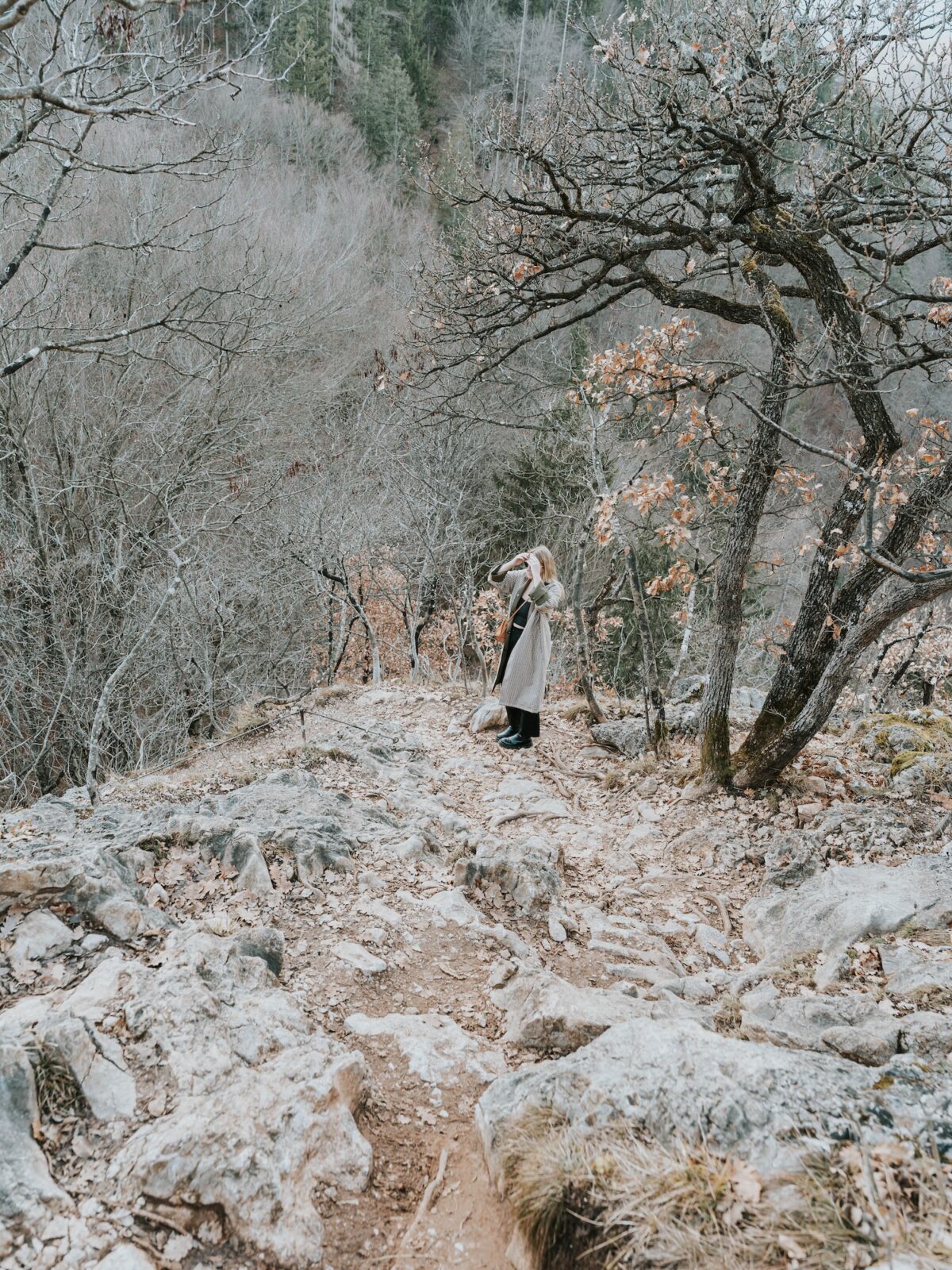
Mala Osojnica & Velika Osojnica: For higher and more dramatic views, head to Mala Osojnica (around 45 minutes) or continue on to Velika Osojnica (another ±20 minutes). Expect a steep forest trail and that feeling of looking into a film set at the top.
Best time to visit Bled: every season has its charm
Bled clearly changes with the seasons — and that’s part of the appeal.
Spring: fresh greens, quieter paths and ideal walking weather Summer: lively, warm and perfect for swimming Autumn: rich colours, misty mornings and fewer crowds Winter: calm, atmospheric and sometimes fairytale-like with snow
Bled in summer: swimming, SUPs and lake days
In summer, Bled is very much a lake destination. Think: towel, book, and regular dips in the water.
Swimming: The most well-known (and organised) swimming area is Grajsko kopališče, located below the castle cliff and equipped with facilities.
SUPs & time on the water: You’ll find several rental spots around the lake for SUPs and boats, especially in high season. The lake is manageable and calm, so you don’t need to be an experienced water sports enthusiast.
A classic: summer tobogganing at Straža Bled: Straža Bled is one of those activities you see everywhere — and honestly, it’s just fun. In warmer months, you take the chairlift up and ride the summer toboggan track down a 520-metre course.
Where to stay in Bled
One of the great things about Bled is how compact it is. The lake, restaurants, walking routes and viewpoints are all close together, so it’s hard to choose a “wrong” location, whether you stay in the centre or just outside.
What really matters is the type of accommodation that suits your travel style. If you enjoy comfort, wellness and a bit of indulgence, the hotels around the lake are a great option — often with views, spa facilities and everything within easy reach. Thanks to the thermal springs, Bled has long had a spa-town vibe, which you can still feel in many hotels today.
We stayed at Rikli Balance Hotel, which struck exactly the right balance between relaxation and scenery: nature during the day, sauna in the evening, with the lake right in front of you. One of those places where your pace naturally slows.
Prefer something smaller and more personal? Bled offers plenty of B&Bs, guesthouses and apartments, often run by locals and located just outside the busiest areas, ideal if you want a quieter base.
And if you enjoy sleeping outdoors or travelling by camper, you’ll also find several campsites and glamping options around Bled, beautifully green and well placed for trips to Bohinj or Triglav National Park.
In short: Bled is small enough to be flexible. Choose the type of stay that fits how you want to travel — not out of fear of picking the “wrong” spot.
And one more thing: try kremšnita
A visit to Bled isn’t complete without tasting kremšnita, the famous Slovenian cream cake the town is known for. Think layers of puff pastry filled with thick vanilla custard and whipped cream: simple, filling, and dangerously good.
You’ll find it in several places around the lake, but the most famous address is Park Café, where the original version was created. Perfect as a reward after walking the lake or hiking up to a viewpoint.
Lovely day trips from Bled
Bled also makes a great base for exploring the surroundings:
Vintgar Gorge – wooden walkways through a dramatic gorge Lake Bohinj – wilder and quieter Radovljica – a charming historic town Triglav National Park – pure nature
Why Bled is more than a photo spot
Yes, Bled is photogenic. But what makes it special is that it never feels loud or demanding. It doesn’t force you to do anything. You can be active, or you can do nothing at all. Everything is optional.
And maybe that’s exactly why so many people end up staying longer than planned.