Normandy is made for slow travel. Clifftop villages sit just 30 minutes from medieval castle ruins. Pebbled beaches lead to winding countryside roads. One day you’re eating seafood by the sea, the next you’re standing beside the remnants of a 12th-century fortress. Everything feels close and always worth the drive .
This article may contain affiliate links. If you book something through these links, we may receive a small commission — at no extra cost to you. This helps us continue travelling and sharing our honest experiences.
Table of Contents
Normandy itself is layered with history. This is a region shaped by Vikings (the name literally comes from Northmen), medieval domains, artists like Monet, and of course the events of D-Day during World War II. It’s compact, culturally rich, and surprisingly manageable when you anchor yourself in one place. We unpacked once, used Dieppe as our home base, and explored the rest through easy day trips — we’re talking charming seaside towns, dramatic chalk cliffs, fairytale villages and historic cities, all within a comfortable drive. If you value calm mornings, flexible afternoons, and travel that actually feels refreshing, Normandy by car might just be the way to go.
Why We Unpacked Once (And Didn’t Regret It)
Staying in a rental home gave us flexibility that hotels simply don’t: space for everyone to breathe, a kitchen for slow breakfasts and easy dinners, nap time without missing the day, and the freedom to pivot plans when our tiny humans needed it. And here’s something important if you’re traveling with children: in many towns across Normandy, restaurants close after lunch and don’t reopen until around 7:00 p.m. That classic French dining rhythm is lovely… unless you have children who eat at 5:30 and are asleep by 7. Having a kitchen wasn’t just convenient — it was essential. Instead of scrambling for an early table that didn’t exist, we cooked simple dinners, opened a bottle of wine, and let the evenings unfold at our own pace.
If you’re interested in finding a rental home like we did, there are tons of options here.
Dieppe
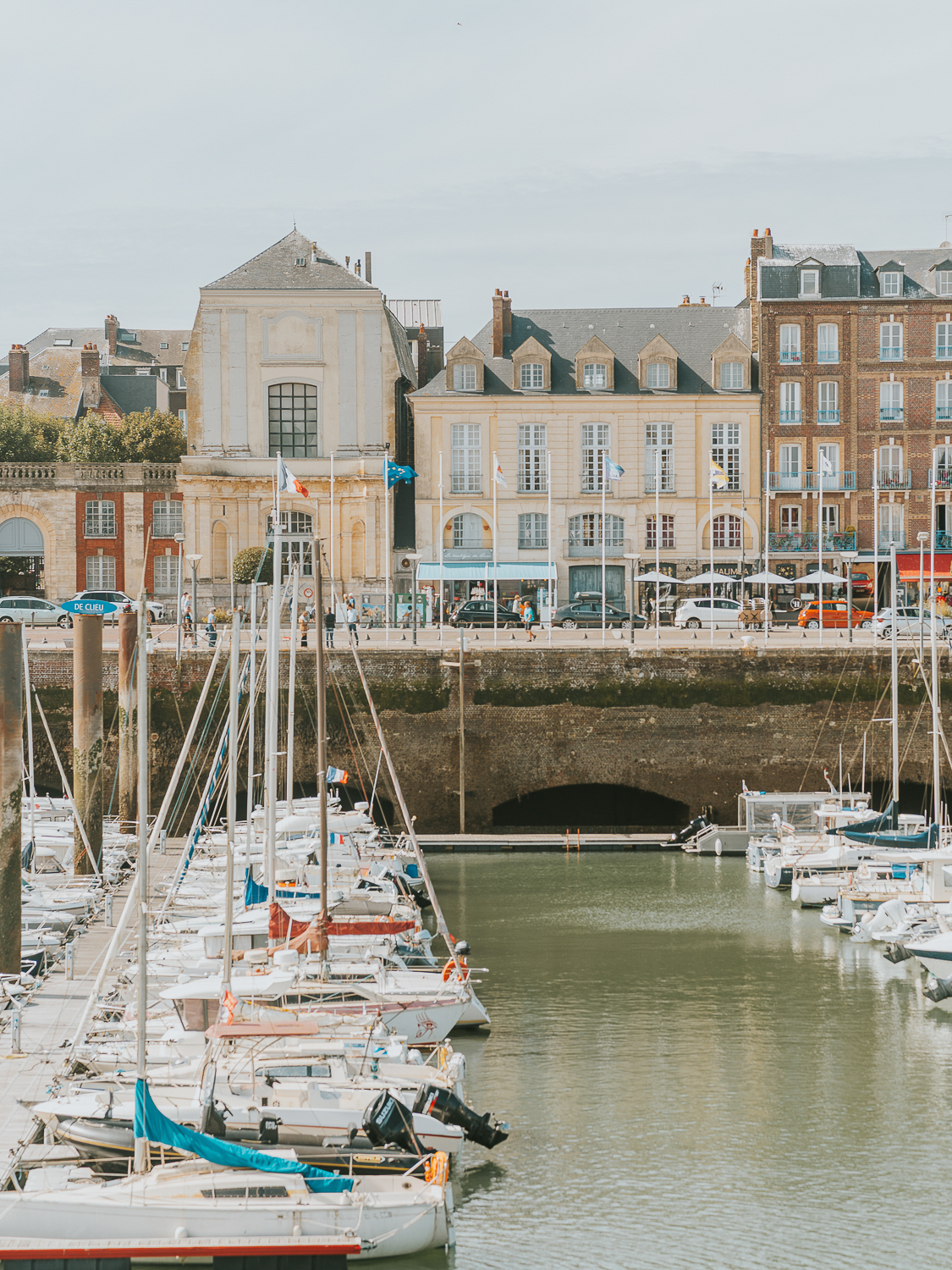
Our first stop, Dieppe! Since we were staying just outside of this particular city, it was our easiest and shortest day out — which made it the perfect introduction to Normandy. Dieppe is a working port city. The harbor is constantly alive with fishing boats, pleasure crafts, and ferries, plus it gives the town a grounded, authentic feel. This isn’t a polished Riviera escape. It’s maritime, historic, and refreshingly real.
Dieppe has long been tied to the sea. It was an important fishing and trading port as early as the Middle Ages, and by the 17th century it had become known for ivory carving — something you can still explore at the local museum, btw.
But here’s the interesting part:Dieppe is widely considered France’s first true seaside resort. In the early 19th century, British aristocrats and Parisian elites began flocking here for sea bathing. At the time, “taking the sea air” was believed to have major health benefits (an idea I personally think has a lot of truth to it). This trend helped launch the entire concept of seaside tourism in France — long before places like Deauville became fashionable.
So yes — you could argue Dieppe helped invent the French beach holiday.
Dieppe Beach
The beach in Dieppe is a wide pebble beach stretching along the promenade, framed by dramatic white cliffs. It’s not a soft-sand, build-castles-all-day type of beach — but that’s part of its charm. The kids loved throwing stones into the water, running along the walkway, and exploring the grassy park area above the beach.
In summer months, Dieppe sets up seasonal beach activities, which can include:
-Inflatable play structures -Temporary activity zones -Trampoline or adventure-style play areas -Seasonal kids programming
These are typically summer installations, not available year-round. Outside peak season, you’ll still find green space and playground areas near the seafront, but the larger structured play zones are generally part of the summer setup.
Château de Dieppe (Can You Visit?)
Yes — and you should. The Château-Musée de Dieppe sits dramatically on the cliff overlooking the sea. Originally built in the 15th century and later modified, it now houses a museum with collections that include:
– Maritime history – Ivory carvings (a nod to Dieppe’s past industry) – Paintings and decorative arts
Even if you don’t go inside, the views from around the château are worth the walk alone. From the beach below, it looks almost cinematic perched above the cliffs.
Inside visits depend on opening hours and season, so checking ahead is wise — especially outside summer.
Other Must-Do Things in Dieppe
If you have a bit more time, consider:
The Saturday Market — One of the largest and most well-known markets in Normandy, stretching through the town centre. It’s lively, local, and worth planning around if your dates align.
Église Saint-Jacques — A Gothic church with maritime carvings that reflect Dieppe’s seafaring identity.
Walking the Harbour — Sometimes the simplest activity is the best one. Watching boats come in, seeing fishermen unload their catch — it’s real life, not staged tourism.
The Village of Arques-la-Bataille
Just a short drive from Dieppe sits the small village of Arques-la-Bataille — the kind of place you might pass through without realizing a medieval fortress looms just above it. The village itself is modest and peaceful — stone façades, tidy homes, flower boxes, and a slow pace that feels very Normandy. It’s not a big tourist town. It doesn’t try to be. But it feels lived-in and warm.
Château d’Arques-la-Bataille
As you walk up the hill leading to the castle from the city, the ruins begin to come into view. A brief history: The Château d’Arques-la-Bataille dates back to the 11th century and was originally built by William Talvas, Count of Arques. Over time, it became one of the most powerful defensive strongholds in the region. In 1589, the nearby Battle of Arques played a crucial role in the French Wars of Religion. Henry IV defeated the Catholic League here, a victory that helped secure his path to the French throne. So while today it feels peaceful and almost forgotten, this hill once sat at the centre of national power struggles.
When we visited, sheep were grazing in the grassy lower grounds surrounding the fortress — a soft and almost poetic contrast to the heavy stone battlements above. The interior structures are protected and not fully accessible, but the walking paths around the château are open. We wandered along the perimeter trail, taking in lovely views over the Béthune and Varenne river valleys.
With kids, it felt like an adventure rather than a museum stop — space to roam, big views, and just enough medieval imagination to keep everyone interested.
And the best part? It’s completely free to explore!
Varengeville-sur-Mer
If Arques-la-Bataille felt medieval, Varengeville-sur-Mer feels artistic.
This small coastal village has long attracted painters, writers and composers, drawn by its dramatic chalk cliffs and ever-changing light. In the late 19th and early 20th centuries, it became a quiet creative refuge. Artists like Claude Monet, Georges Braque and even writers such as André Gide spent time here.
It’s peaceful. Slightly tucked away. And visually unforgettable.
The Chalk Cliffs & Beach
We parked in one of the free parking areas near the cliff paths and made our way down toward the beach.
Important note if you’re traveling with children: The walk down includes steep stairs near the bottom. It’s absolutely manageable, but we would not recommend bringing a stroller. A baby carrier is a much better option.
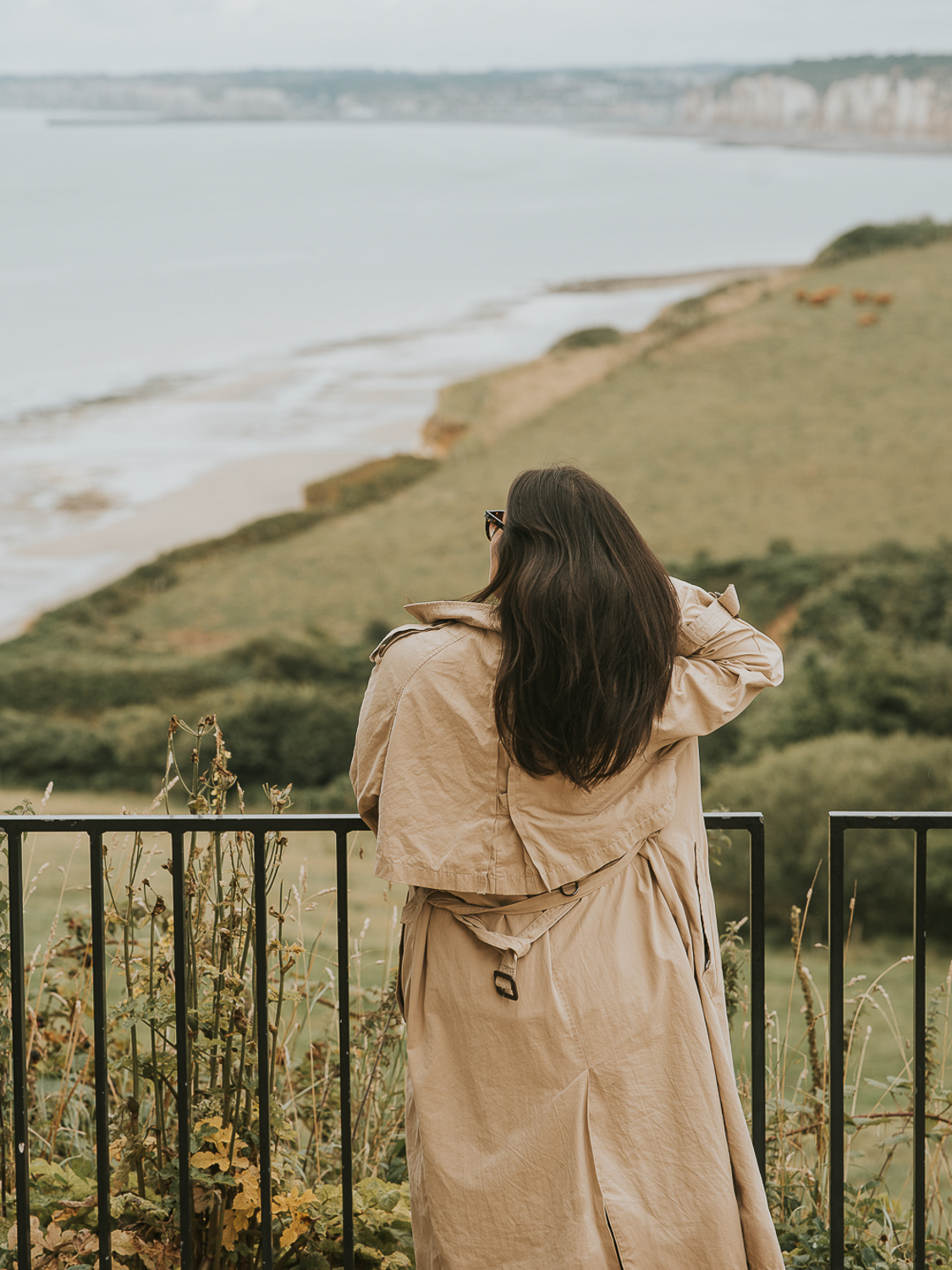
Once you reach the bottom, the view opens up dramatically. We’re talking white chalk cliffs, pebbled shoreline, and wide open skies. The beach itself is wild and natural rather than manicured. At low tide, pools form between the stones, and our toddler had the best time splashing in puddles and running along the shore. It felt expansive and free.
These cliffs are part of the same geological formation that stretches toward Étretat (but a lot less crowded), and they are a defining feature of Normandy’s Alabaster Coast.
Église Saint-Valery: The Cliff Church
After exploring the beach, we headed to the Église Saint-Valery — the small church perched dramatically at the edge of the cliffs above the sea. And yes, this is where the Monet connection comes in.
Claude Monet painted this church multiple times in the 1880s. He was captivated by the way the light hit the stone structure against the sky and sea. The church, standing alone at the cliff’s edge, became a subject of his exploration of atmosphere and shifting color.
The church itself dates back to the 12th century, though much of what stands today reflects later restorations. Its location is what makes it extraordinary — perched on the cliff with uninterrupted views over the Channel. From the churchyard, you can look down and see the very beach you just walked along. The perspective shift alone makes the climb worth it. Even if you’re not an art lover, the view from here is reason enough to visit.
Veules-les-Roses
If I had to choose one place that completely stole my heart in Normandy, it would be Veules-les-Roses. It feels almost impossibly picturesque with flower boxes spilling over stone walls, ivy and climbing vines wrapped around half-timbered houses, and narrow cobblestone lanes leading to tiny boutiques and quiet cafés. The entire village feels romantic — peaceful, intimate, and beautifully preserved.
The Smallest River in France
Veules-les-Roses is famous for something quite unexpected: It is home to France’s smallest river, the Veules.
The river is just about 1,149 metres long (a little over one kilometre) from its source to the sea, making it officially the shortest river in the country. It winds gently through the village, passing water mills, gardens and small wooden bridges before emptying directly into the Channel.
There’s a lovely walking path that follows the river from its inland source all the way down to the beach. We did part of this little nature walk, and it was perfect with kids. Flat, scenic, peaceful. You pass ducks, greenery, and historic stone buildings that feel straight out of a painting. The river has shaped the village’s history too — it once powered mills and supported local watercress cultivation, something the town is still known for.
The Beach & Family Play Area
As the little Veules river reaches the sea, the village opens up into a wide pebble beach framed by chalk cliffs. Like many beaches along Normandy’s Alabaster Coast, this one is made up of smooth stones rather than sand — perfect for skipping rocks and puddle jumping, less ideal for sandcastle construction. Right before reaching the beach, there’s a small park and children’s play area that makes this stop especially family-friendly and completely stole our hearts.
You’ll find: – A playground structure – Open green space – Seasonal beach installations
And, in summer, a supervised outdoor paddling/pool area for children
The outdoor pool area (often referred to as a small seawater or paddling pool installation) is typically seasonal, operating during the warmer summer months when lifeguards are present.
The playground itself and green space are accessible year-round. It’s one of those thoughtful touches that makes this village feel especially welcoming to families — kids can run, splash, and reset before or after exploring the river path and town.
Église Saint-Martin
Veules-les-Roses is also home to the Église Saint-Martin, a church with roots dating back to the 12th and 13th centuries. The church blends Romanesque and Gothic architectural elements, reflecting the transitions in building styles over time. Its stone façade and modest size match the scale of the village — elegant but not overpowering.
Historically, the village became popular in the 19th century with artists and writers, and the church stood as a quiet witness to that transformation from fishing village to seaside retreat. Even if you’re not particularly drawn to churches, it’s worth stepping inside briefly or admiring it from the outside as part of the village walk. It anchors the village historically and visually.
Rouen
Rouen was the biggest city we visited on this trip — and you feel it immediately. It’s louder. Busier. A little grittier in places. But beneath that urban edge is one of the most historically significant cities in France. Rouen is the capital of the Normandy region, and it has been a powerful city since the Middle Ages. Once a major trading hub on the Seine River, it grew wealthy through commerce and became one of the most important cities in medieval France.
Joan of Arc & How She's Connected To Rouen
In 1431, during the Hundred Years’ War between France and England, Joan of Arc was captured, tried for heresy, and executed in Rouen. She was burned at the stake in what is now known as Place du Vieux-Marché. Her trial took place in Rouen, and it was here that she became both a martyr and, later, a saint. She was canonised in 1920 and remains one of France’s most revered historical figures. So naturally, while here we just had to visit the Historial Jeanne d’Arc, the Joan of Arc museum located in the Archbishop’s Palace — the very place where her trial was held.
Now, important note for families:
The museum is immersive and powerful, but it can be intense. The experience includes dramatic lighting, projections, historical reenactments, and emotionally heavy content. We actually had to leave fairly quickly because it was too frightening for children under six. For older kids or adults, it’s deeply moving and historically important. For little ones, it may be overwhelming.
Gros-Horloge: The Famous Clock
One of Rouen’s most recognisable landmarks is the Gros-Horloge. This enormous astronomical clock dates back to the 14th century and is mounted in an ornate Renaissance arch that spans across the street. It’s golden, intricate, and surprisingly whimsical for something so old. You can walk beneath it, photograph it endlessly, and even visit the interior museum to learn how it functions. It’s one of those details that makes Rouen feel like a storybook city.
Rouen Cathedral
Cathédrale Notre-Dame de Rouen is massive, towering, and gothic in the most dramatic sense. It’s the same cathedral that Claude Monet famously painted over and over again in different light conditions — part of his exploration of atmosphere and colour.
When we visited, street musicians were playing outside, and the entire square felt alive. The combination of music, medieval architecture and the sheer scale of the façade creates a moment that feels cinematic. The cathedral dates largely to the 12th–16th centuries and was heavily damaged during World War II but restored beautifully. Inside, it’s equally impressive — vaulted ceilings, stained glass, and centuries of history layered into stone.
Half-Timbered Houses & Place du Vieux-Marché
Rouen’s old town is packed with classic half-timbered houses, many dating back to the 15th and 16th centuries. Wandering through these streets is easily one of the best things to do in Rouen. And snapping a picture for the gram proves easily almost anywhere you go.
We also visited Place du Vieux-Marché, the square where Joan of Arc was executed. Today it’s lively and filled with cafés and restaurants, but a modern church — Église Sainte-Jeanne-d’Arc — now stands there as a memorial to her. It’s an interesting contrast: tragedy turned into reverence.
Étretat
If Normandy has a postcard image, it’s Étretat. This is easily one of the most well-known destinations in the region — and once you arrive, it makes perfect sense why. The white chalk cliffs curve dramatically into the sea, forming natural arches and needle-like rock formations that feel almost unreal. No matter how many times you’ve seen them on Instagram, in paintings, or on travel brochures, they still stop you in your tracks.
Why is Étretat So Popular?
Étretat’s fame isn’t new. In the 19th century, it became a beloved retreat for artists, writers and Parisian society. The cliffs were painted repeatedly by Claude Monet, who was fascinated by how light transformed their color and texture throughout the day. The most famous formations include: – Falaise d’Aval – L’Arche (the natural arch) – L’Aiguille (the “needle” rock) Beyond Monet, writers like Guy de Maupassant and even composer Jacques Offenbach spent time here. Étretat was part of the same wave of coastal fascination that made Normandy a seaside escape for the French elite. Geologically, the cliffs are part of the Alabaster Coast, shaped by centuries of erosion from wind and sea — which explains their dramatic curves and vertical drop-offs.
The Cliffs: A View from Above and Below
Most visitors start on the beach. The pebble shore sits between the towering white cliffs, and from below you get that classic upward perspective — massive limestone walls against blue sky. But if you have the energy, the real magic happens above. There are marked hiking paths that climb up either side of the beach. The walk up is steady but manageable, and once you reach the top, the views open completely.
From above, you can see:
– The full arch formation
– The needle rising from the sea
– The coastline stretching endlessly in both directions
It’s one of the most rewarding short hikes in Normandy.
Important note for families: The cliff paths are exposed with steep drop-offs in some areas. They’re safe and well-trodden, but you’ll want to keep little ones close.
Chapelle Notre-Dame-de-la-Garde
Overlooking the village from the cliffs stands the Chapelle Notre-Dame-de-la-Garde. Originally built in the 19th century (after earlier structures were destroyed), the chapel serves as a symbolic guardian over Étretat and its sailors. Its location is intentional — perched high above the sea, watching over the coastline.
From here, you get panoramic views not just of the cliffs but of the entire village below. The chapel itself is simple and whitewashed, almost modest compared to the drama around it. But the setting is what makes it special. Standing there, wind coming off the Channel, cliffs stretching endlessly — it’s one of those quiet Normandy moments that balances out the busier energy of the town below.
Wrapping Up
Normandy surprised us. Not because it was beautiful — we expected that — but because of how varied it felt within such short driving distances. Medieval ruins, chalk cliffs, flower-covered villages, artistic hideaways and a capital city layered in history — all explored from one quiet home base near Dieppe.
Of course, this itinerary worked beautifully for us — but Normandy offers so much more than what we covered in this single trip. There are historic D-Day beaches, Mont-Saint-Michel, countryside abbeys, cider routes and coastal towns still waiting to be explored.
That’s the beauty of traveling by car here: you create your own rhythm. You decide what fits your family, your energy, your season of life. But if you’re traveling with little ones and looking for an itinerary that balances history, scenery, short drives and breathing room — this one is a pretty ideal place to start.