Travelling to Slovenia by train in winter | our Interrail route from cities to coast and mountains
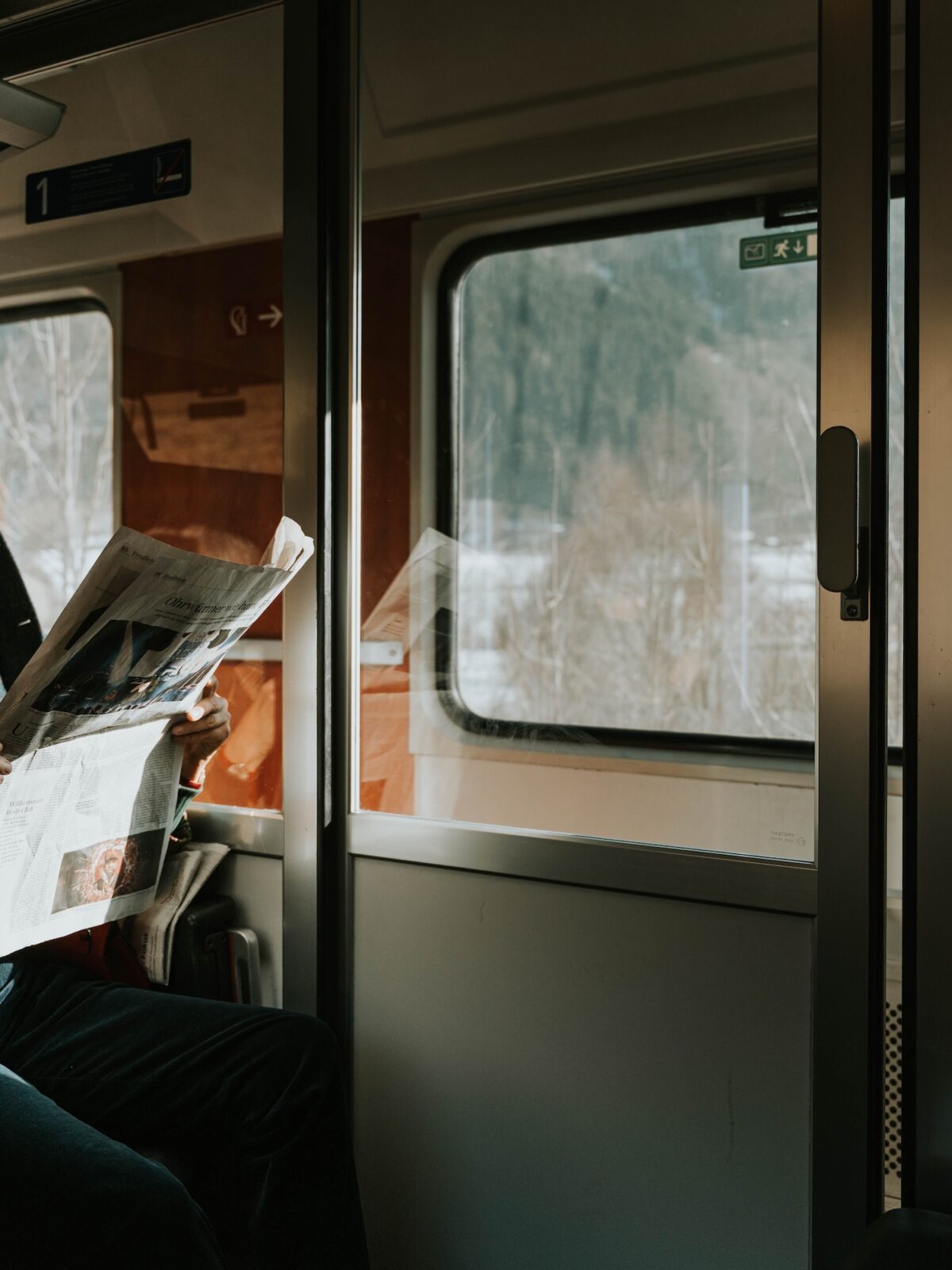
Most people associate travelling to Slovenia by train with summer: green mountains, blue lakes and coastal road trips. But winter might actually be the most beautiful time to explore Slovenia by rail. No traffic jams, no crowded airports, no summer tourist masses — just quiet stations, snow-covered landscapes, atmospheric cities filled with festive lights, and a journey that begins the moment you step on board. Travelling to Slovenia by train in winter doesn’t just make sense, it’s surprisingly relaxing. Especially with Interrail, which allows you to travel flexibly across Europe and adjust your route along the way!
This post contains affiliate links. If you make a purchase through these links, we may earn a small commission at no additional cost to you. This article was written in collaboration with Interrail and is based on our own travel experiences.
Table of Contents
Slovenia works surprisingly well for train travel. It’s a compact country with short distances, allowing you to move from cities to nature, from mountains to coast, often within just a few hours. Last December, we travelled entirely by train with Interrail from the Netherlands to Slovenia and back. Our route took us from the wine city of Maribor to the capital Ljubljana, from caves and castles in Postojna to the Adriatic coast and the iconic Lake Bled. This journey perfectly showcases how diverse Slovenia is and how well the country works with a combination of trains, buses and short transfers.
Travelling to Slovenia with Interrail: comfortable, flexible and surprisingly easy
With Interrail, you’re not just travelling from A to B — the journey itself becomes part of your trip. One pass allows you to plan multiple travel days within a set period. The biggest difference compared to a regular train ticket? Flexibility. You roughly plan your route in advance, but you can adjust it along the way. Want to stay an extra day in Ljubljana? No problem. Add an extra stop? Absolutely, as long as you use your travel days wisely. That flexibility brings peace of mind: no fixed tickets, no stress when delays happen, and always alternative routes available.
Another major advantage of Interrail is the comfort. You depart from and arrive in city centres — no airport transfers, no security checks, no strict baggage rules. No hassle with liquids or weight limits: whatever you can carry, you can bring. On longer routes, especially through Germany and Austria, travelling by train is surprisingly comfortable. ICE trains offer spacious seating, power sockets, often decent WiFi and a restaurant carriage. On some trains, you can even order food and drinks via QR code and have them delivered to your seat. Long travel days feel relaxed and manageable, especially compared to flying.
Seat reservations are often required or strongly recommended on these routes. Luckily, they’re usually still available last minute via Deutsche Bahn and ÖBB, which you can access directly through the Interrail app. Within Slovenia itself, reservations are usually not required, making travel even more straightforward.
If you prefer to plan your entire route in advance, you can use the official Interrail Trip Planner. This tool not only shows possible routes, but also indicates which Interrail pass best suits your journey.
From the Netherlands to Slovenia: travelling in stages
Our journey started with trains from Rotterdam to Munich, which took around 8 hours. It’s a long travel day, but a very comfortable way to begin the trip. With fast ICE trains and smooth transfers, it doesn’t feel like mere transportation, it truly feels like the start of the adventure.
From Munich, we continued towards Maribor via Austria. This route immediately shows why train travel is such a wonderful way to travel: landscapes change gradually, snow-covered mountains appear on the horizon, and without much stress, you’re suddenly crossing into Slovenia.
Maribor – a calm introduction to Slovenia
Maribor is an ideal first stop in Slovenia. Quieter than Ljubljana and less touristy, yet with a lovely atmosphere and a compact city centre. Two nights (we stayed at Gentry11) is perfect — enough time to settle in, wander through the old town, stroll along the Drava River and get a first feel for Slovenia. From Maribor, it’s easy to continue on to the capital, which is about 2.5 hours away by train.
Ljubljana is the beating heart of Slovenia’s rail network and a perfect base. The city is compact, atmospheric, and especially beautiful in winter thanks to festive lights and Christmas markets. Three nights (we stayed at Eagle’s Nest) is ideal. Plenty of time to explore the old town, visit the castle, wander through Tivoli Park and enjoy the many cafés along the river. From Ljubljana onwards, the journey becomes increasingly scenic. The next stop is Postojna, a short train ride of around 1 hour and 15 minutes.
Postojna – caves and castle
Postojna is best known for its vast cave system and the spectacular Predjama Castle. This is one of those places where one night is possible, but two nights are far more practical — especially in winter, when daylight hours are limited and you don’t want to rush everything into one day. With two nights, you can visit both the cave and the castle at a relaxed pace. We stayed at the Postojna Cave Hotel Jama, located right next to the caves. Through their own website, you can also book packages including breakfast, dinner and experiences.
Good to know: off-season, there are no shuttle buses. A taxi from the caves to the castle can easily cost around €40, so keep this in mind when planning.
From here, the route continues towards Slovenia’s beautiful coast. Train connections from Postojna to Koper are limited, so we decided to take a bus to Koper instead, followed by another bus to Piran. Tickets are easy to buy on board (bring cash to be safe) or at the ticket counter at the station.
Via Koper to Piran – the Slovenian coast
Piran is small, atmospheric and beautifully set along the Adriatic Sea. Its narrow streets, Venetian-style architecture and quiet winter pace make it a wonderful place to slow down. Two nights is the perfect amount of time to truly enjoy the town, take long walks along the coast and explore nearby villages at a relaxed pace. We stayed at Vila Piranesi, right in the heart of the old town.
After the coast, the route heads inland once more. This part of the journey really highlighted what travelling through Slovenia is like: trains where possible, buses where more practical — always with flexibility in mind. That flexibility was put to the test at the coast. Due to a misunderstanding with a bus driver in Piran, we were directed to the wrong bus, missed our connection in Koper and discovered that the next train wouldn’t depart for another five hours. Not a disaster, but a clear reminder that connections here are less frequent than we might be used to. When travelling through Slovenia by train, it’s wise not to plan too tightly and to allow room for these situations. In the end, we opted for a bus to Ljubljana and continued by train from there to Bled.
Bled – winter landscapes and tranquillity
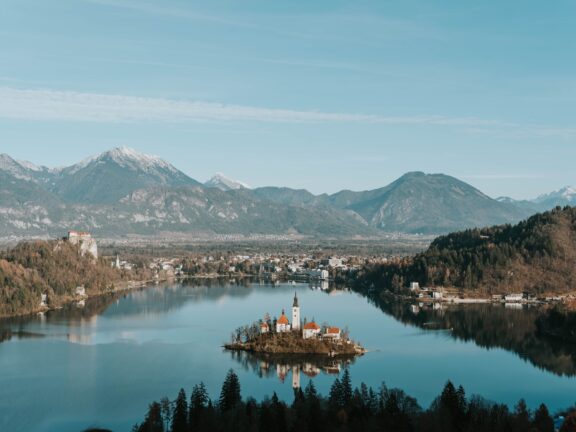
Bled in winter feels almost fairytale-like. Mist hovering over the lake, quiet walking paths, snow-covered mountain peaks in the distance. Three nights gives you enough time to walk around the lake, visit the island, and explore the viewpoints and the castle. We stayed at the Rikli Balance Hotel.
From Bled, we travelled back to the Netherlands in one long day — surprisingly doable. In the Interrail app, we adjusted the minimum transfer time from one minute to twenty minutes, intentionally building in extra buffer to reduce the risk of missing connections. With reserved seats on the long stretches through Austria and Germany, the journey home felt relaxed. An extra bonus: from Munich, there’s a direct train to Utrecht, making the return journey even smoother!
Train travel in Slovenia: a realistic picture
Slovenia’s rail network is functional, but not yet equally dense everywhere. Connections between cities like Maribor and Ljubljana are reliable and frequent. Towards the coast and the mountains, services become less frequent and sometimes less intuitive. Flexibility is key here: occasionally, a bus is simply faster and more practical — and fortunately, buses are very affordable.
Ljubljana plays a central role in this network. The station is set to undergo major renovations and expansion in the coming years, showing that Slovenia is seriously investing in rail travel and sustainable mobility. The infrastructure is evolving, and you can feel that. This is exactly why the combination of Interrail plus local buses works so well in Slovenia: trains form the backbone, with buses filling in the gaps where needed. Easy peasy.
Why winter is perfect for travelling to Slovenia by train
Slovenia in winter feels different from summer. Fewer tourists, more local atmosphere. Ljubljana isn’t necessarily quieter, but it is beautifully illuminated, with Christmas markets lining the Ljubljanica River. Bled feels mysterious and almost magical in the mist. And even on the coast, in Piran, there’s a calm winter charm you simply won’t find in July.
For train travel, winter has an added bonus: fewer peak moments. Trains are often less crowded, accommodation is cheaper, and you don’t need to plan as far in advance. Winter brings calm. Instead of rushing from place to place, you travel mindfully. The train perfectly matches that pace: you watch the landscape change, you travel sustainably, and you experience the country before you even arrive. For anyone wanting to experience Slovenia differently, the train is one of the most beautiful ways to enter the country.
And honestly — travelling by train in winter just feels right: warm and cosy inside, while the landscape slowly changes outside. Pure bliss.