Fulufjället National Park | hiking to Sweden’s highest waterfall
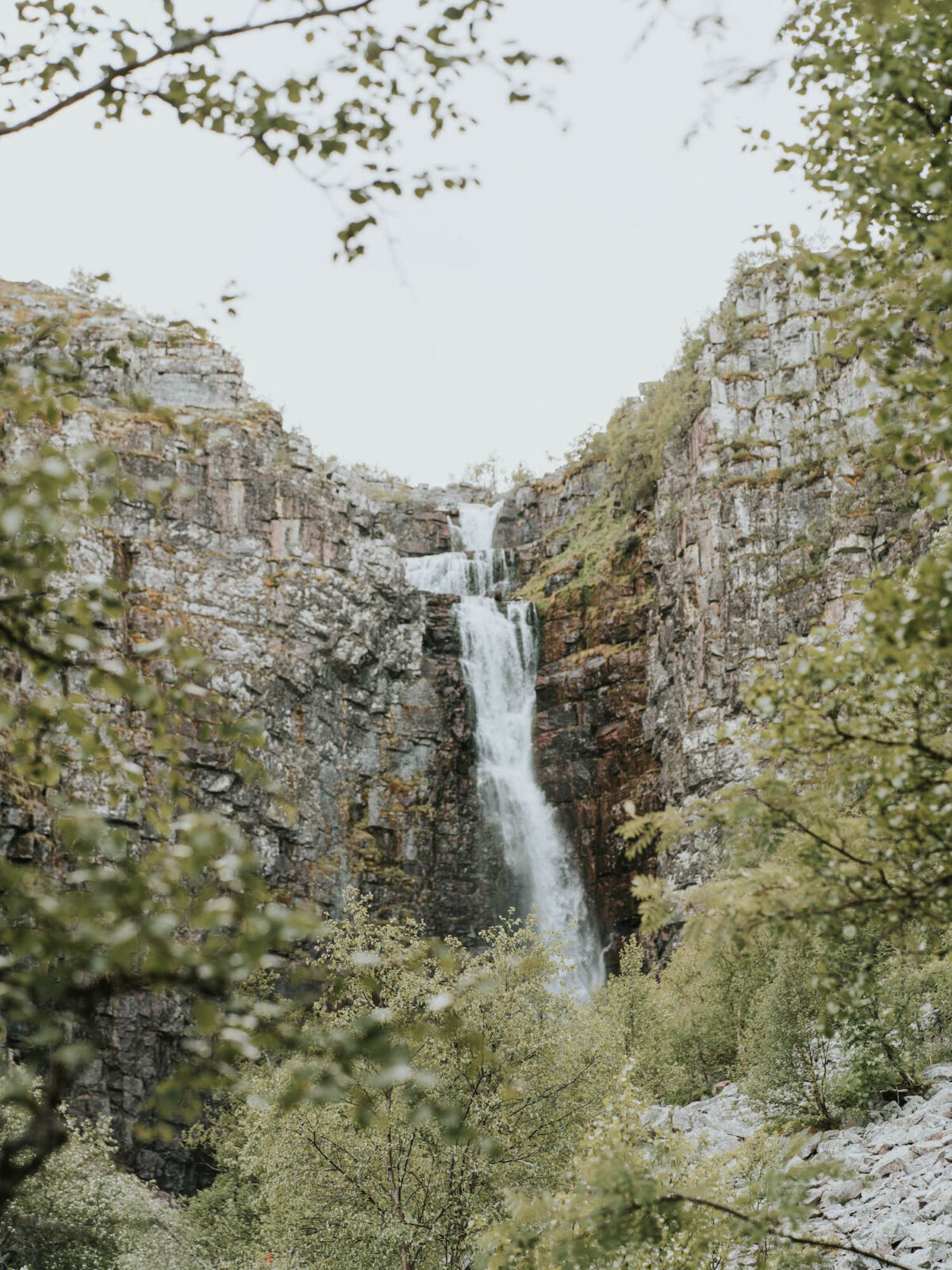
Fulufjället National Park ended up being one of the wildest and quietest places we visited in Sweden. With Sweden’s highest waterfall, a 9,500-year-old tree, and trails that feel far more remote than they actually are, it’s a must-see if you’re in Dalarna.
This post contains affiliate links. If you make a purchase through these links, we may earn a small commission at no additional cost to you.
Table of Contents
We visited in mid-June, off-season, and somehow had most of the park to ourselves — which was peaceful, but also… a bit spooky. The weather changed constantly (it was so cold!), and every time a twig snapped in the woods, one of us whispered, “bear?” more often than we’d like to admit.
And honestly, it wasn’t that dramatic. The park really does have brown bears (around 10–20 live on both sides of the Swedish–Norwegian border). Seeing one is rare, but the thought alone adds a bit of tension to an otherwise calm hike.
Where to start: Naturum Fulufjället
We drove to Fulufjället in the morning, with a quick stop in Särna (the quiet little village we visited the day before, you can read about it here). From there, it was an easy drive to the national park, and the first thing we noticed when we arrived was the amount of parking. So. Much. Parking. Even in early summer, it felt almost empty.
From the parking area, it’s just a short walk to Naturum Fulufjället, the visitor centre. We popped in for a toilet break, grabbed a map, and looked through the small exhibition about the park: geology, wildlife, and how this dramatic landscape was formed.
The highlight for us was the section about Old Tjikko, the 9,500-year-old spruce that grows in the park. It’s one of the oldest known trees in the world, and the display explains how researchers discovered its age. If you like learning a bit before hitting the trail, it’s worth a quick look around.
Once we’d warmed up and sorted out our layers, we headed out toward the Njupeskär trail!
Hiking to Njupeskär Waterfall (1–1.5 hours)
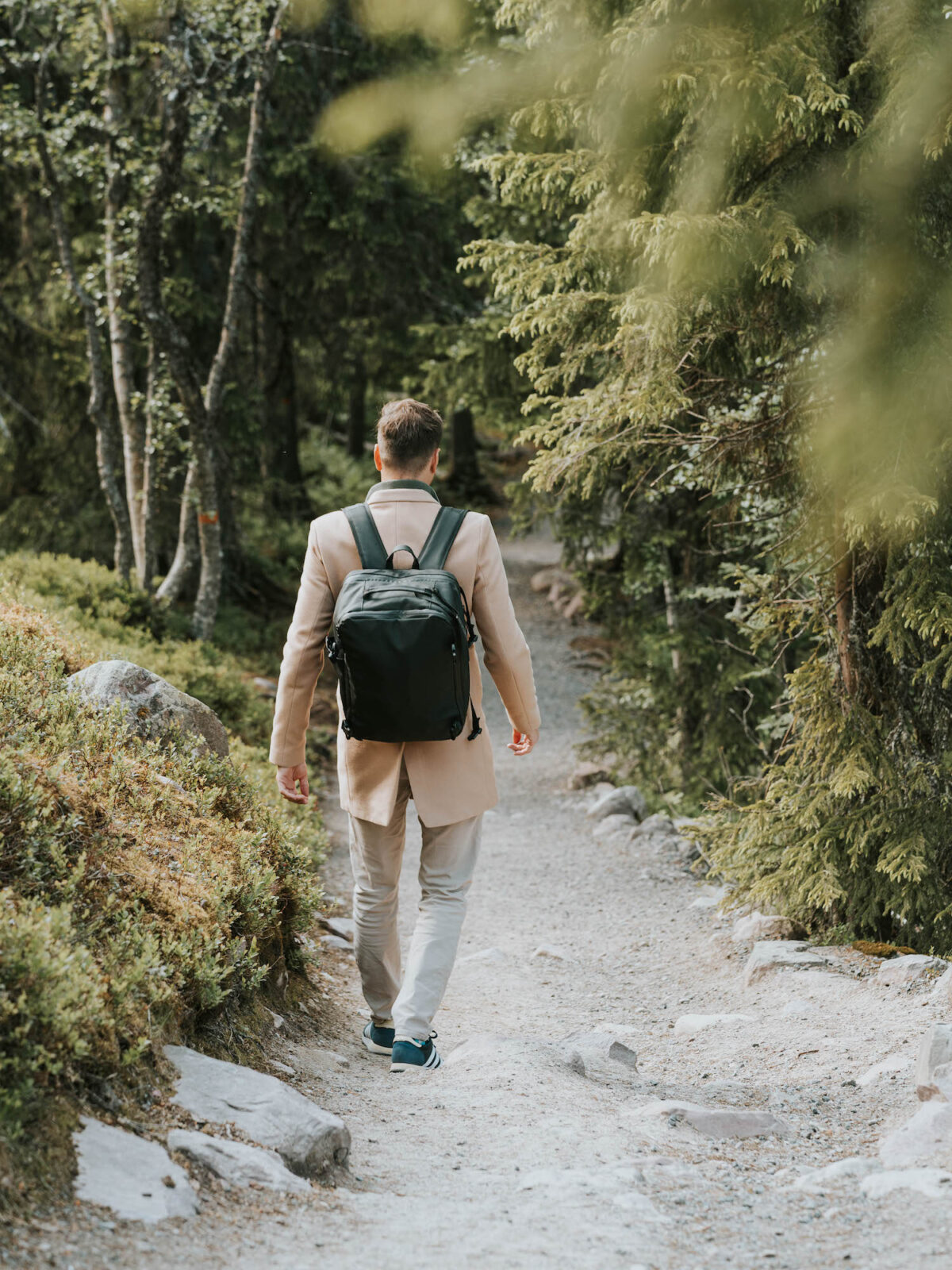
The most popular trail from Naturum is the short loop to Njupeskär, Sweden’s highest waterfall at 93 metres. From Naturum, the route to Njupeskär is very easy to follow. There are clear signs right from the visitor centre, and once you’re on the trail you can simply follow the orange markers. The full loop (Njupeskärsslingan) is about 4 km and takes around 1 to 1.5 hours, depending on how long you stop at the viewpoints.
Trail info Distance: ~4 km loop Time: 1–1.5 hours Difficulty: Easy Path: wooden walkways, gravel, gentle inclines Best for: anyone actually; beginners, families, casual hikers
This trail is a great option if you want a scenic hike without committing to a full day. It’s straightforward and well-maintained, with viewpoints and bridges along the way. As you get close to the waterfall, the temperature drops quickly: the spray and the wind make it feel much colder than the rest of the walk. Even in June, we were freezing at the viewpoint, so definitely bring layers (and maybe even gloves).
We didn’t see many people on the trail, just a few families and a small group near the falls. Off-season hiking really does feel like an entirely different experience.
Want to go further? Longer hikes and overnight trails
Fulufjället has an extensive network of marked trails, around 140 kilometres in total, so there’s plenty to explore if you want more than the Njupeskär loop. After visiting the waterfall, you can continue on longer routes that lead above the canyon and out toward the mountain plateau. The terrain becomes a bit tougher here: steeper sections, looser stones, and a much more open landscape compared to the forested valley. Some trails pass close to Old Tjikko, the famous 9,500-year-old spruce, while others head out toward the simple mountain cabins where you can stay the night. For experienced hikers, there are even multi-day routes that cross the park and continue into Norway. These longer hikes offer a real wilderness feeling — fewer people, no facilities, and fast-changing weather — so they’re best if you’re comfortable being fully self-sufficient.
A little more about Fulufjället National Park
Fulufjället National Park takes its name from the Fulufjället mountain, which sits inside the park and reaches 1,044 metres. The park covers 385 km² and is made up of dense conifer forests, deep valleys, and a wide, open plateau covered in mosses and low vegetation.
The park was officially opened in 2002 by King Carl XVI Gustaf of Sweden. Fulufjället also became part of a PAN Parks project (a cooperation between WWF and European partners) aimed at combining nature conservation with responsible tourism.
Today, the park is known for: – Njupeskär, Sweden’s highest waterfall – Old Tjikko, a 9,500-year-old spruce – Quiet, remote trails that feel surprisingly wild – Cross-border nature, with protected land continuing into Norway
It’s a great option if you want easy access to hiking and dramatic nature without needing expert-level experience.
When to visit Fulufjället National Park
Fulufjället changes completely with the seasons, so the best time to visit really depends on what kind of experience you want. Summer is the most accessible period: the trails are clear, the lakes warm up enough for a swim in July and August, and early mornings around midsummer sometimes light up the waterfall beautifully. Even then, it can still be cold. We visited in June and spent most of the hike adding layers instead of taking them off.
Autumn is quieter and, honestly, one of the best times to be here if you like colourful landscapes and peaceful trails. Mid to late September is when the colours are at their peak, although early snow can arrive as early as the beginning of October.
Winter transforms Fulufjället completely. The park stays snowy from October all the way into May, making it great for skiing, snowshoeing or snowmobile trips on marked winter routes. Njupeskär freezes into a giant ice wall, which is impressive to see, but the summer trail becomes extremely slippery and unsafe; the park strongly advises against going down into the canyon in winter. December to February can be brutally cold, while April often brings blue skies and perfect snow.
Spring arrives late and only briefly. Snow melts quickly, streams swell, and birdlife returns, but the trails are often wet or still partly snow-covered.
If you want to hike comfortably, mid-June is usually the first reliable time to visit.
– There are no cafés or shops inside the park, bring snacks and water. – Phone signal is limited in some areas. – The Njupeskär trail is suitable for most people, but it can get slippery near the waterfall. – Dogs are allowed on a leash. – Check the weather before you go, it changes quickly at higher altitudes.